
You look at a photo and notice one tooth sitting slightly out of line. Or maybe your teeth are fairly straight, but their shape, color, or spacing bothers you.
That is where the choice between veneers and Invisalign can get confusing.
Both treatments can change the appearance of a smile, but they do very different things. Invisalign moves your natural teeth into new positions. Veneers change the visible shape, size, or color of selected teeth by covering their front surfaces.
A simple way to think about it:
If tooth position is the main problem, Invisalign may make more sense. If shape, color, proportions, or certain surface imperfections are the main concern, veneers may be the more relevant treatment to discuss. Some patients may benefit from both treatments at different stages.
The right choice still depends on your teeth, bite, oral health, and what you actually want to change.
Veneers vs. Invisalign at a Glance
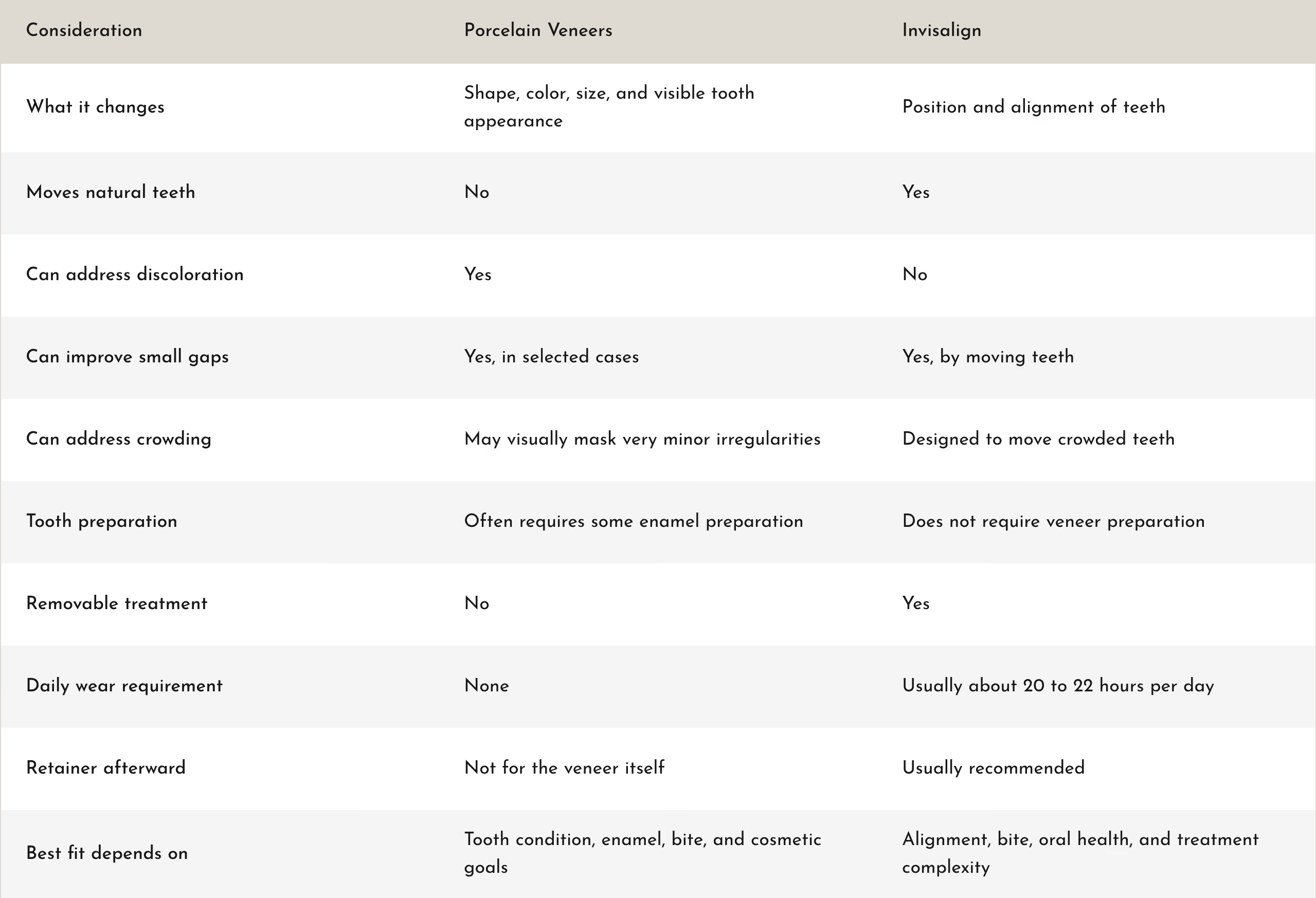
The table makes the treatments look fairly straightforward, but the decision becomes more interesting when the same cosmetic concern could potentially be approached in more than one way.
What Do Veneers Actually Change?
Porcelain veneers are thin restorations placed over the visible front surface of a tooth.
Rather than moving the tooth, a veneer changes what you see.
That can make veneers useful when concerns involve things such as:
- Tooth shape
- Uneven proportions
- Certain chips or worn areas
- Persistent discoloration
- Small spaces between teeth
- Minor cosmetic irregularities
Imagine two front teeth that are healthy and reasonably well aligned, but one is shorter or differently shaped than the other. Moving the teeth with aligners would not necessarily solve the shape difference. A cosmetic restoration may address the concern more directly.
There is an important tradeoff, though.
Porcelain veneers often require a small amount of enamel to be removed so the restorations can fit naturally and bond properly. How much preparation is needed depends on the tooth and the treatment plan. That makes the treatment a long-term commitment rather than something you simply stop using later.
For that reason, veneers should not be chosen only because they appear to offer a faster route to a straighter-looking smile.
The health and position of the natural teeth still matter.
What Does Invisalign Change?
Invisalign takes a different approach.
Instead of covering teeth, a series of clear removable aligners gradually moves them toward planned positions.
That makes Invisalign more relevant when the underlying problem is actually alignment, such as:
- Crowded teeth
- Spaces between teeth
- Teeth that have shifted
- Certain bite concerns
- Teeth that sit noticeably out of position
At The Haven Family & Cosmetic Dentistry, Invisalign treatment begins with an evaluation and digital scanning. A treatment plan maps the intended tooth movement, and the aligners are then worn in sequence.
The aligners need to be worn consistently. For most patients, that means roughly 20 to 22 hours per day, removing them for meals and oral hygiene.
Once the teeth have moved, retention becomes part of the long-term plan. Teeth can shift again after orthodontic treatment, so wearing a retainer as directed matters.
Should You Choose Invisalign for Crooked Teeth Instead of Veneers?
If your main concern is that your teeth are actually crooked, crowded, or in the wrong position, Invisalign is usually the more logical treatment to evaluate first.
Why?
Because orthodontic treatment addresses the position of the natural teeth rather than disguising that position.
Veneers can sometimes make a mildly uneven smile look straighter because their shape can be designed differently. But they do not correct the underlying tooth position or move the roots.
That distinction becomes especially important when alignment affects the way the teeth fit together.
There are situations where a cosmetic dentist may still discuss veneers for minor visible irregularities, particularly when other concerns such as tooth shape or discoloration are present at the same time. The right recommendation depends on the amount of correction needed and the condition of the teeth.
Are Veneers Better for Discolored Teeth?
This is one area where the two treatments have very different jobs.
Invisalign does not change the natural color of your teeth. Its purpose is tooth movement.
Porcelain veneers can change the visible color of treated teeth because the porcelain covers their front surfaces.
That does not mean every person unhappy with tooth color needs veneers. Professional whitening may be a much more conservative option for many types of staining.
But if discoloration is difficult to correct with whitening, or if color is only one part of a larger issue involving tooth shape or surface appearance, veneers may become part of the conversation.
This is why starting with the actual problem matters more than starting with a treatment name.
What About Gaps Between Teeth?
Both treatments may be considered for certain spaces, but they solve them differently.
Invisalign can gradually move teeth together to close appropriate gaps.
Veneers may change the width or shape of teeth so that a small visible space is covered.
Those are not interchangeable approaches.
If a gap exists because of tooth position, orthodontic movement may provide a more direct solution. If the teeth are unusually narrow or have shape differences, simply moving them together may not create the proportions you want.
A dentist needs to look at why the space exists before deciding how to address it.
Which Option Preserves More Natural Tooth Structure?
For a patient with healthy teeth whose primary concern is alignment, Invisalign has an important advantage: it moves the existing teeth without covering their front surfaces with restorations.
Porcelain veneers generally require preparation of the tooth and removal of some enamel.
That does not make veneers an overly aggressive treatment when they are appropriately selected. It does mean the decision should be made with an understanding that veneers are restorative work placed on natural teeth.
If both treatments could potentially improve the appearance of your smile, preservation of healthy tooth structure is one factor worth discussing during the consultation.
Which Treatment Is Faster?
Veneers can often change the visible appearance of selected teeth in fewer appointments than orthodontic treatment takes to physically move teeth.
But speed alone is not a useful way to choose between them.
Invisalign treatment length varies depending on how much movement is required and the complexity of the case. Veneer treatment also depends on how many teeth are involved, whether other dental work is needed first, and the treatment plan.
A faster cosmetic change is not necessarily the better choice if the problem that bothers you is caused by tooth position or bite.
The better question is: What needs to change to create the result you want?
Do Veneers or Invisalign Look More Natural?
Both can create natural-looking results, but they do it differently.
Invisalign changes the position of your natural teeth while leaving their visible surfaces largely unchanged. If you already like the shape and color of your teeth, improving their alignment may be enough.
Porcelain veneers give the dentist more control over visible characteristics such as shape, proportions, and color. That can be helpful when alignment is only one part of what you want to change.
The better choice depends less on which treatment looks “more natural” and more on what is causing the concern in the first place.
Could You Need Invisalign and Veneers?
Possibly.
Someone may have alignment issues that are better addressed by moving the teeth first, along with shape, wear, or color concerns that remain afterward.
In that situation, treatment does not necessarily have to be framed as veneers versus Invisalign.
Orthodontic treatment can sometimes establish better tooth positions first. Once alignment is complete, the remaining cosmetic concerns can be reassessed. Some patients may find that straightening alone gives them the change they wanted. Others may still benefit from whitening, bonding, veneers, or another cosmetic treatment.
Planning the sequence matters because the final position of the teeth can affect later cosmetic decisions.
Which One May Be a Better Fit for You?
Invisalign may make more sense when the main concern is tooth position. That includes crowding, unwanted spacing, teeth that have shifted, or certain bite problems that can be addressed with clear aligners.
Veneers may make more sense when the teeth are already reasonably positioned but their shape, proportions, color, wear, or surface appearance is the bigger concern.
There is some overlap. A small gap, for example, might be addressed by moving the teeth or by changing their proportions with cosmetic treatment. That is why the cause of the problem matters as much as how it looks.
If meaningful alignment changes are needed along with cosmetic changes, Invisalign may sometimes come first. The smile can then be reassessed once the teeth have reached their planned positions.
Are Veneers or Invisalign More Expensive?
Neither treatment has one universal price, and comparing them directly can be misleading because they are planned differently.
Invisalign cost depends in part on the complexity and length of orthodontic treatment.
Veneer cost depends largely on the number of teeth being treated, the material used, and the details of the restorative plan.
That means comparing a full Invisalign case with one veneer would not tell you much. Neither would comparing Invisalign with eight or ten veneers without first deciding which treatment actually addresses the problem.
The Haven offers insurance and third-party financing information through its patient resources, but individual coverage and out-of-pocket costs depend on the treatment and the patient's plan.
An examination gives you something more useful to compare: actual treatment options and their associated costs.
How Do You Decide Between Veneers and Invisalign?
Start with what you actually want to change.
“I want straighter teeth” can mean several things. A tooth may truly be out of position, or it may simply look uneven because of its shape, width, wear, or the space beside it.
A cosmetic evaluation can separate the concern into a few basic questions:
- Position: Are the teeth actually out of alignment?
- Shape: Are their size, edges, or proportions creating the issue?
- Color: Is discoloration part of what you want to change?
- Condition: Are chips, wear, decay, or existing restorations involved?
- Bite: Does the way the teeth come together affect the treatment plan?
Once you know what needs to change, choosing between orthodontic movement, cosmetic restoration, or a combination of treatments becomes much more straightforward.
Veneers vs. Invisalign in Gambrills, MD
At The Haven Family & Cosmetic Dentistry, you do not need to choose between veneers and Invisalign before your appointment.
Dr. Nitchel Bastien can evaluate the position and condition of your teeth, discuss what you would like to change, and explain which treatment options are appropriate for your smile.
The Haven offers porcelain veneers through its cosmetic dentistry services as well as Invisalign treatment with digital scanning and customized treatment planning.
If you are in Gambrills, Crofton, Odenton, Bowie, Waugh Chapel, or a nearby community, schedule a cosmetic consultation to find out whether the change you want requires moving teeth, changing their appearance, or potentially using both approaches in sequence.
Frequently Asked Questions
Can veneers straighten crooked teeth?
Veneers can make certain mildly irregular teeth appear straighter by changing the visible shape of the tooth, but they do not physically move teeth. If tooth position or bite needs to be corrected, orthodontic treatment such as Invisalign may be more appropriate.
Is Invisalign better than veneers?
Neither treatment is universally better. Invisalign is designed to move teeth. Veneers change the visible shape, size, and color of teeth. The better option depends on what is causing the cosmetic concern.
Can Invisalign fix tooth color or shape?
No. Invisalign moves teeth but does not change their natural color or substantially change their shape. Whitening, bonding, veneers, or another cosmetic treatment may be considered when those concerns remain.
Do veneers require shaving down your teeth?
Porcelain veneers often require removal of a small amount of enamel so the restorations can fit and bond properly. The amount of preparation varies depending on the tooth, the type of veneer, and the treatment plan. Because enamel removal is not reversible, this is an important part of the decision to discuss before treatment.
Can I get veneers after Invisalign?
Potentially. Some patients complete orthodontic treatment first and then reassess remaining concerns involving tooth shape, wear, or color. A dentist should plan the sequence based on the final position and condition of the teeth.
Should I straighten my teeth before getting veneers?
If meaningful tooth movement is needed, orthodontic treatment may be recommended before cosmetic restorations are planned. Moving the teeth first can change their final positions and may affect how later cosmetic treatment is designed.