
Porcelain Veneers in Gambrills, MD
Sometimes it is one tooth that catches your eye in every photo. An edge may be chipped, one tooth may look darker than the others, or small spaces may have become more noticeable over time. Other times, several details are bothering you at once.
At The Haven Family & Cosmetic Dentistry in Gambrills, MD, Dr. Nitchel Bastien offers porcelain veneers for patients who want to improve the color, shape, spacing, or appearance of worn teeth. The planning goes beyond individual teeth. Your facial features, bite, natural tooth structure, and what you actually want to change all matter.

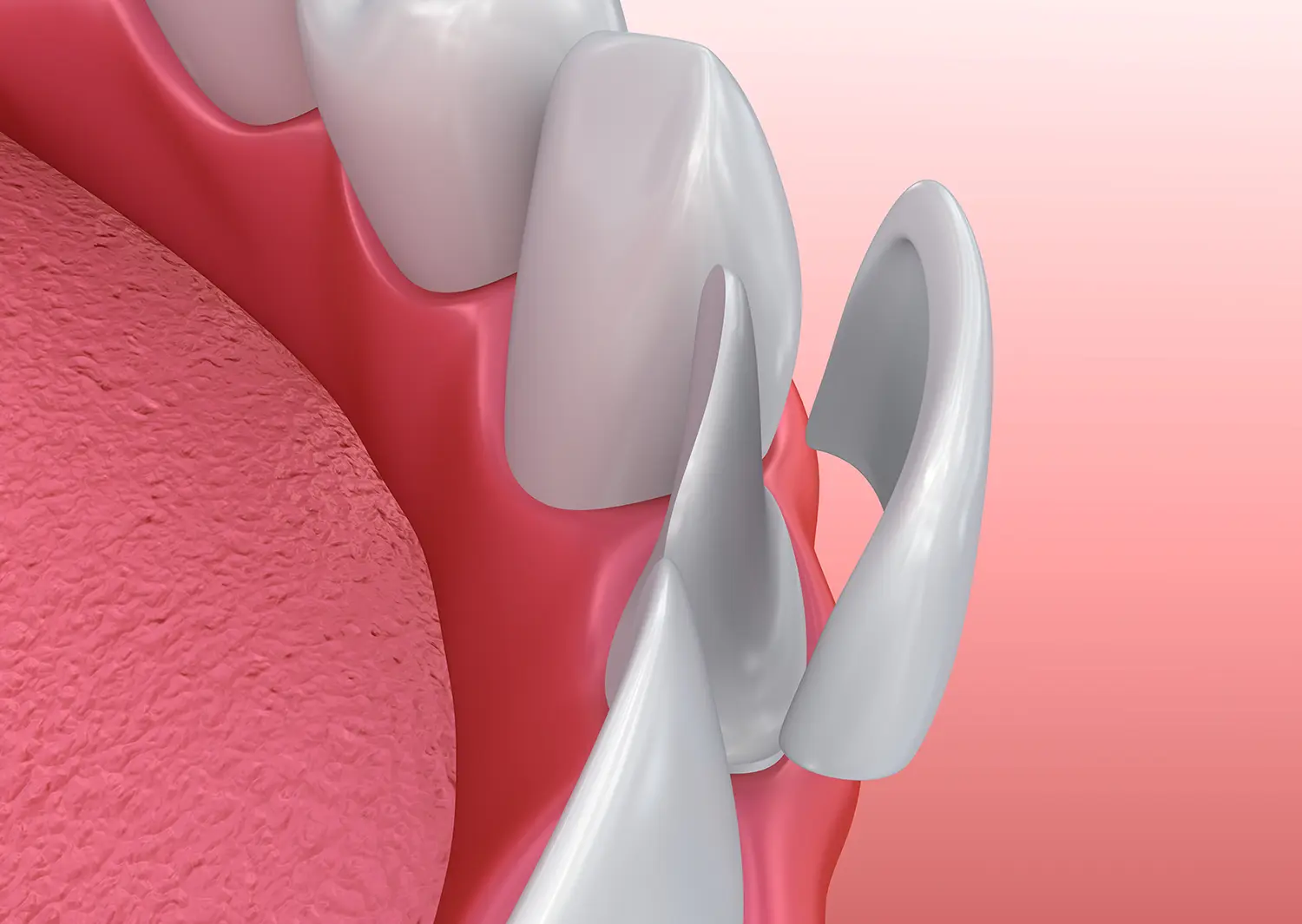
Porcelain veneers are thin, custom-made shells bonded to the front surfaces of selected teeth.
They can change several characteristics at the same time, including tooth color, shape and proportions, small visible spaces, chipped or worn edges, and the appearance of mildly uneven teeth.
Unlike a dental crown, which covers more of the tooth, a veneer primarily covers the front surface.
Porcelain veneer treatment generally requires removing some natural enamel so the restoration can fit and bond properly. That makes veneers a long-term treatment decision rather than a temporary cosmetic change.
The question is not simply whether veneers can change your smile. It is whether veneers are the right way to make the change you want.
What Can Veneers Improve?
The Haven specifically considers porcelain veneers for cosmetic concerns involving color, shape, spacing, and worn edges.
Veneers may be useful when several concerns affect the same teeth. For example, a group of front teeth might have uneven shapes, discoloration, small spaces, and worn edges. Veneers can address several of those characteristics together.
But more treatment is not automatically better.
If color is the only concern, whitening may be enough. A small chip may be addressed with dental bonding. If tooth position is causing the problem, Invisalign may make more sense than covering the teeth.
At The Haven, the treatment is selected based on the problem rather than starting with a preset procedure.
How Do I Know If Veneers Are Right for Me?
A cosmetic consultation starts with a simple question:
What would you like to change about your smile?
Dr. Bastien then needs to determine what is creating that appearance and whether veneers are an appropriate way to address it.
Your evaluation may consider:
- Tooth and gum health
- Existing decay or dental work
- Your bite
- Tooth position
- Available enamel
- Grinding or clenching habits
- Which teeth show when you smile
- Your cosmetic goals
Dental problems such as active decay or gum disease should generally be addressed before elective cosmetic restorations are placed.
The consultation may confirm that veneers make sense. It may also reveal that whitening, bonding, Invisalign, or another option can accomplish your goal while preserving more natural tooth structure.
Both outcomes are useful.
Veneers vs. Bonding, Whitening, and Invisalign
Several cosmetic treatments can improve a smile, but they do different jobs.
Teeth Whitening
Whitening changes the color of natural teeth.
It does not rebuild a chipped edge, change tooth shape, close a space, or reposition teeth. If discoloration is your primary concern, whitening may provide the change you want without placing restorations.
Dental Bonding
Bonding uses tooth-colored material to make smaller changes to a tooth.
It may be appropriate for concerns such as a small chip, worn corner, minor shape difference, or small space. In some situations, bonding allows more natural tooth structure to remain untouched compared with porcelain veneers.
Invisalign
If your concern is primarily caused by tooth position, moving the teeth may be more appropriate than covering them.
The Haven's cosmetic approach specifically considers Invisalign before veneers when alignment is the underlying issue. Correcting tooth position first may also reduce the amount of restorative treatment needed later.
Learn more about Invisalign at The Haven.
Porcelain Veneers
Veneers are especially useful when several cosmetic concerns overlap.
They may allow Dr. Bastien to address shape, shade, proportions, spacing, and worn edges within one coordinated treatment plan.
Sometimes treatments are combined. Whitening may be completed before veneers so restorations can be planned around the final tooth shade. Invisalign may come first when tooth position needs to be corrected before restorative treatment.
Learn more about cosmetic dentistry at The Haven.
What Happens During the Veneers Process?
The first step is planning.
Dr. Bastien examines your teeth, discusses what you would like to change, and evaluates how your teeth function together. Digital records may also be used as part of the treatment-planning process.
If porcelain veneers are appropriate, the general process typically involves preparing the selected teeth by removing a small amount of enamel. An impression or digital model is then used to create veneers that fit those teeth.
Once the restorations are ready, their fit and appearance are checked before they are bonded in place.
The exact sequence can vary depending on your treatment plan and the number of teeth involved.
Before anything begins, you should understand what is being changed, why it is being recommended, and what the treatment is intended to accomplish.
Will Porcelain Veneers Look Natural?
That is the goal.
The Haven's cosmetic dentistry approach focuses on creating a result that fits the individual patient rather than making everyone conform to the same idea of a "perfect" smile.
Dr. Bastien considers characteristics such as:
- Tooth shape
- Tooth proportions
- Shade
- Visible spacing
- The relationship between the teeth and surrounding facial features
Porcelain can be made to resemble natural tooth structure, but the material itself is only part of the result.
Planning matters just as much.
Sometimes subtle changes to a few teeth create the most natural result. In another smile, several teeth may need to be treated together to create balanced proportions.
That is determined during treatment planning rather than by choosing a standard number of veneers in advance.
Do Veneers Require Removing Enamel?
Porcelain veneers generally require removing a small amount of enamel so the restorations can fit and bond properly.
Because that enamel does not grow back, conventional porcelain veneer treatment is considered irreversible.
This is an important part of the decision.
If whitening, bonding, Invisalign, or another treatment could reasonably accomplish the same goal while preserving more natural tooth structure, Dr. Bastien can discuss those options before veneers are selected.
A cosmetic consultation should help you understand those tradeoffs, not simply show you what veneers can change.
How Many Veneers Will I Need?
There is no standard number.
Someone who wants to improve one noticeably different tooth may need a completely different plan from someone who wants to change several teeth across the visible smile.
Dr. Bastien may consider:
- Which teeth show when you smile
- Which teeth actually need treatment
- Existing tooth color
- Tooth shape and proportions
- Visible spaces
- Tooth position
- Whether other cosmetic treatment will happen first
The goal is not to place as many veneers as possible. It is to determine which teeth, if any, actually benefit from treatment.
Can Veneers Fix Crooked Teeth?
Veneers can change the appearance of mildly uneven or misaligned teeth, but they do not move the teeth themselves.
If tooth position is the main issue, Invisalign may be a more appropriate treatment.
For someone whose concerns also involve color, proportions, worn edges, or spacing, veneers may still be part of the discussion.
You do not need to decide which treatment you need before the consultation. Dr. Bastien can evaluate the position and condition of your teeth and explain the available options.
How Do You Care for Porcelain Veneers?
Veneers still depend on healthy natural teeth and gums.
Continue to:
- Brush twice daily with fluoride toothpaste
- Clean between your teeth every day
- Maintain regular dental examinations and cleanings
- Avoid using your teeth to bite fingernails or hard objects
Natural teeth with veneers can still develop decay around the restorations.
If you grind or clench your teeth, tell Dr. Bastien. Those forces can affect veneers and may influence treatment planning.
Porcelain veneers are long-term restorations, but they are not expected to last forever. Like other dental restorations, they can eventually chip, crack, loosen, wear, or require replacement.
Frequently Asked Questions
No. Veneers can address several cosmetic concerns, including tooth color, shape, spacing, chips, worn edges, and some appearance-related alignment concerns.
At The Haven, veneers may be considered when several of these issues affect the same area of the smile.
Porcelain veneers are a long-term treatment, but the restorations themselves do not last forever.
They may eventually need repair or replacement. Because conventional porcelain veneers generally require enamel removal, the treatment is considered irreversible.
Teeth whitening changes the color of natural tooth enamel but does not whiten porcelain in the same way.
If you are considering both whitening and veneers, treatment can be planned in the appropriate sequence so the final restorations coordinate with the surrounding teeth.
Sometimes. If alignment is the primary concern, Invisalign may make more sense than veneers. In other situations, veneers or a combination of treatments may be appropriate.
The recommendation depends on your tooth position, bite, natural tooth structure, and cosmetic goals.
The porcelain itself cannot develop tooth decay, but the natural tooth around and underneath a veneer still can.
Daily brushing, cleaning between your teeth, and routine dental care remain important after treatment.
No. A veneer primarily covers the front surface of a tooth and is commonly used to change its appearance. A dental crown covers substantially more of the tooth and is generally used when greater structural restoration or protection is needed.
Yes. Porcelain veneers are one of the cosmetic dentistry options available at The Haven Family & Cosmetic Dentistry in Gambrills.
Schedule a Porcelain Veneers Consultation in Gambrills
At The Haven Family & Cosmetic Dentistry, Dr. Nitchel Bastien can examine your teeth, listen to what you would like to change, and explain whether porcelain veneers or another cosmetic option fits your goals.